
My mother never asked me to stay.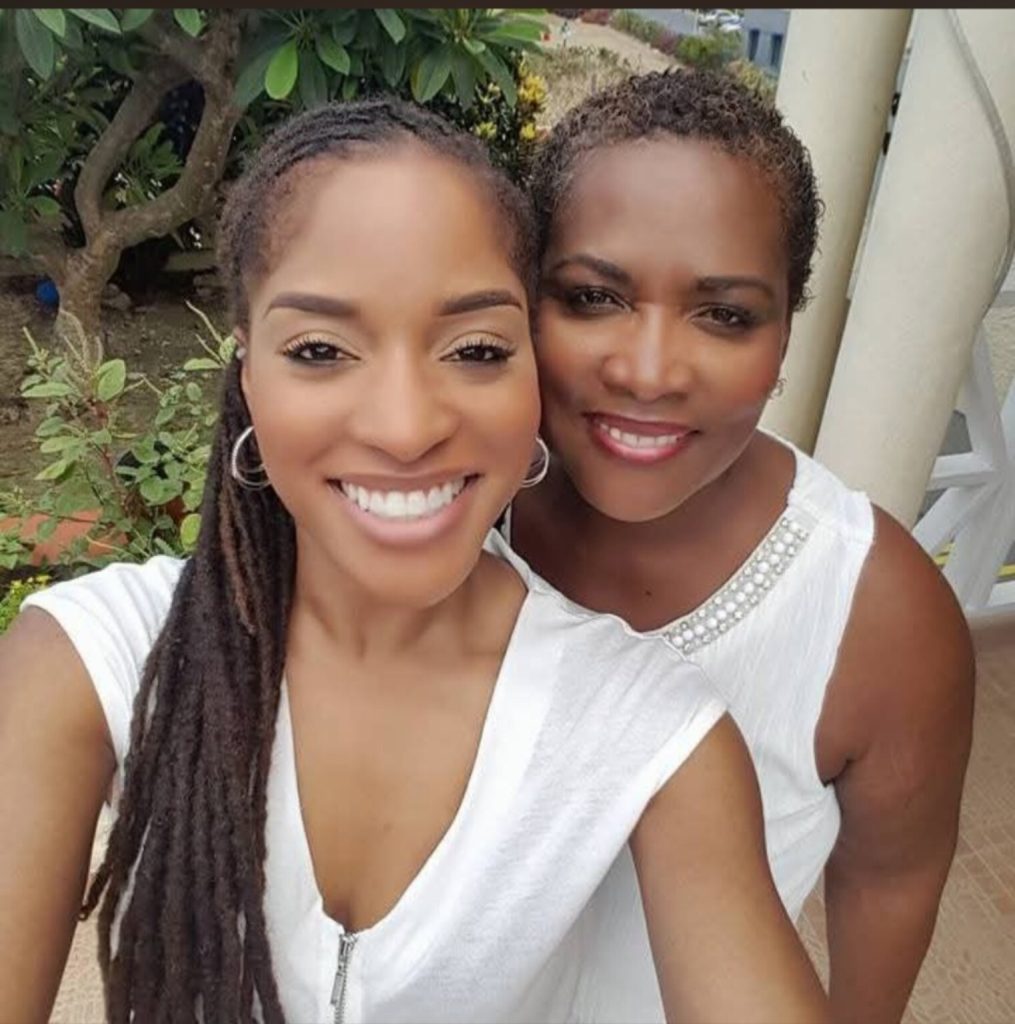
She wanted to. I know that now.
We would stand outside the departure lounge at Grantley Adams International Airport, where she would watch me leave at the end of every visit and return to a country that hadn’t yet decided what to do with me. And something in her would hold the question back.
She knew me well enough to know that once I had made a decision, it was made.
And she knew something else.
What she had built was a foundation, not my destination.
She didn’t want it to be the end of my story.
I arrived in the UK in 2007 with a career behind me and silence ahead.
I had been established in the insurance market in Barbados. Knowledgeable. Known.
I knew the market and the market knew me.
I had a life that was good in ways I didn’t fully appreciate until I no longer had it.
The applications I sent out came back as nothing.
Not rejection.
Nothing.
As if they had been absorbed by a country that couldn’t yet place me.
My money was running out. Eventually, I took a job at Boots.
I had never worked in retail.
The work was physical in a way I hadn’t expected. Early starts. Long hours on your feet. Stock arriving. Sections to maintain. The behind-the-scenes work customers rarely see.
I have never been afraid of hard work, and I am not afraid of it now. What I know from having worked in retail is that it asks more of people than many professions acknowledge.
But the lane was one I would not have chosen.
And there is something particular about doing hard work in a lane that isn’t yours.
It doesn’t make the work harder in any objective sense.
It makes it harder to locate yourself inside it.
Every shift reminded me of the distance between where I was, where I had been and where I wanted to be.
That distance was the weight, not the work.
Nobody at Boots knew where I had come from.
They saw the uniform. The section I was assigned to. The way I sometimes answered questions with more depth than the question seemed to require.
They didn’t see the insurance market in Barbados where I had been established and known.
They didn’t see the applications I had sent across the UK that disappeared into silence.
They saw a woman on a shop floor.
At the time, it was the only place available to me.
Professional women came in for products and sometimes looked through me. Some asked questions and then seemed surprised by the answers.
I understood what was happening.
They wanted a transaction.
I kept offering something else.
I finished my shifts and cried in the shower.
Barbados was complicated during those years.
I went back often.
My mother would say, just come, don’t worry about money.
And I would go, because the flat was small and the shifts were long and sometimes I needed to remember who I was when nobody in the UK could see it.
Her house was everything my London life was not.
Four times the size. Light in a way English light rarely is. My friends were there. The social life I had built over years was still intact, waiting for me each time I returned.
For a few days or a few weeks, I would inhabit the life I had left and it would close around me as though it had never been interrupted.
And then it would be time to leave again.
I would pack my bag in a house that was warm and full and fly towards a flat that was cold and quiet and a job that reminded me daily of everything I had not yet become.
My mother would come to the airport.
She would watch me go through departures.
And she would hold something back.
I know now what she was holding.
The question she could never quite ask.
Why are you going back? What are you going back to?
I didn’t have an answer that made sense.
Not one I could have said out loud.
I just knew I had to go.
The way you sometimes know something before you can explain it. The way the body moves towards something the mind hasn’t finished reasoning through yet.
Something in her knew it too.
That’s why she never asked.
And so we stood at airports, the two of us holding the same unspoken thing, and I kept going back to a country that hadn’t decided what to do with me yet.
I was eventually promoted to team manager at Boots.
Senior leaders had succession plans in place. Store manager was the next step they could see for me.
I could see something else.
I started looking at insurance again.
This time, it worked.
AXA.
I didn’t know what BAME meant the first time I encountered it at AXA.
Someone used the acronym in a work context and I had to work out what the letters stood for before I could work out what they meant.
Black, Asian and Minority Ethnic.
A category.
A box with a label on it.
I had grown up in Barbados.
When I try to explain why that matters here, I keep coming back to the same thing:
I did not grow up as a minority.
I grew up in a place where everywhere I looked there were examples of Black Bajan excellence.
Our Prime Minister.
The journalists on television.
The radio presenters.
The university professors.
The bankers. The lawyers. The pastors. The teachers. The athletes. The entertainers.
Excellence was not exceptional where I came from.
It was the backdrop.
It was what the adults around me had built and what I understood, without anybody needing to tell me, was available to me too.
Then I arrived in the UK and someone put me in a box.
The box was full of people I didn’t know, whose histories and experiences were not necessarily mine.
The terminology changed over the years, but the function of the category often felt similar. It was a way of grouping people whose individual experiences were far more complicated than the label could hold.
I understood the administrative logic.
I didn’t recognise myself inside it.
Later in my career, when staff networks formed around these categories, I would sometimes attend and find that the conversations did not fully map onto my experience.
The experiences being named were real.
Structural inequality is real. Racism is real. The barriers those networks were trying to identify and address are real.
But the particular texture of my experience was different.
Mine was arriving from a place where my identity had been whole and ordinary and finding that the country I had moved to needed to simplify it before it could file it.
That is its own kind of loss.
Not greater than what someone else was navigating.
Just different.
The box couldn’t hold the specificity of it.
It couldn’t hold the island where Black excellence had been the water I swam in from childhood.
It couldn’t hold the woman who had been established and known before she became invisible.
It couldn’t hold the inner knowing that kept sending me back to a country that had not decided what to do with me yet.
No box that size could hold all of that.
Barbados recently announced plans to extend citizenship by descent to grandchildren and great-grandchildren.
I read it and felt something release.
I had been thinking about my daughter’s citizenship for some time. I had explored the routes available, found them complicated, and eventually put it down without fully letting it go.
Then the announcement came.
It felt like arriving at a building I had been circling for years and finding the door open.
My daughter carries Bajan and Welsh in equal measure.
Her legacy is rich in ways she doesn’t yet have the language for.
The island her mother grew up on.
The country her father comes from.
The woman her mother became in the space between the two.
I am a citizen of Barbados by descent.
I was born in England and moved to the island when I was three.
I did not arrive there already formed.
I was formed there.
By the light and the landscape and the people. By the standard of excellence that was simply ordinary where I came from.
That formation did not leave me when I left the island.
It came with me.
To every Boots shift.
Every application that went unanswered.
Every shower I cried in.
Every airport departure where my mother held back the question she could never quite ask.
Barbados shaped me. So did everything that came after I left.
I understand that now in a way I could not have understood it in 2007.
The woman standing at the airport, going back to a country that hadn’t decided what to do with her yet, did not know what she was building.
She only knew she had to keep going.
If I could stand beside her now, I would not warn her.
I would not tell her how things turn out.
I would just stand with her for a while.
And then I would tell her this.
It is connected.
The Boots shifts.
The applications that disappeared into silence.
The airport departures.
The categories that never quite held you.
The years of going back to a country that could not yet see what you could become there.
None of it is the whole story.
But none of it is separate from the woman you are becoming either.
You have an inner knowing.
You cannot always explain it, and you do not need to.
The easier thing would sometimes be to go back to where you already know how to belong.
You will not.
Something in you already understands that familiarity and rightness are not always the same thing.
The foundation your mother built was never your destination.
You are building your own.
And one day your daughter will stand somewhere, maybe at an airport, maybe somewhere neither of you can picture yet, and the ground beneath her feet will include things she did not have to build for herself.
A sense of where she comes from.
More than one place in which she can belong.
Choices that took generations to make available.
And some of the ground beneath her will have been made from years that, while you were living them, seemed to make very little sense.
That is what legacy can be.
Not the absence of struggle.
The ground it becomes.